
If these walls could talk: the boathouse over time
This piece about the club’s history was kindly contributed by Richie Brown.
You’ve probably all seen pictures of the old boathouse, but what was it really like? Here’s my recollection.
Just the essentials
Size-wise it was I think less than half the width of the present building, and the length was from the slipway doors to about the gym end of the tank, a single storey high. We managed to fit in an eight, several fours, five or six sculling boats, and a couple of pairs/doubles. By the time the blades and sculls were racked there wasn’t a lot of room left!
The changing room was probably about a quarter of the size of the current men’s locker room. It had a small shower room for a couple of people. Of course, there was no ladies changing room, as the ‘new age’ hadn’t arrived yet!
There was no room for any gym facilities so most of our land training was done at a night school gym. This was run by John Hunter, dad of Poplar boy Terry and grandad of eventual Olympic Gold medallist Mark. Some also made use of the limited area outside the changing room for weight training.
Working roots
Attached to the boathouse was a derelict warehouse, and some bright spark thought it would be a good idea to knock an entrance through the wall from the changing rooms. They put lights up with extension leads and we used the area for circuit training etc. What hadn’t been taken into account was the fact that this area had previously stored drums and sacks of chemicals. Some of the residue powder found its way into our lungs during our exertions there. It probably accounts for some of the weird behaviour of older members today!
The building was actually part of the derelict North Greenwich Railway Line which terminated there. Our boathouse was probably an engineers’ workshop. We moved in at some point around 1935, and more about that can be found on the club website with Harry Read’s memoirs. The entrance was from Ferry Street through a padlocked pair of doors with the key hidden behind a loose brick – no fobs needed! This of course left it open to liberty-takers after hours needing a venue for more amorous activities, or so I’m told…
Making way for the new building
I don’t think we carried on with the warehouse for long; we decided it was easier to have a whip round and build a new boathouse. Well, that might not entirely be the truth but it was one of the reasons the powers that be (Captain John Skelton and co) got a group of the great and the good together to get the clubhouse we’ve got now.
The old boathouse was our home until 1969 when it was pulled down and the new boathouse erected. We found room to store the boats under the old railway arches in Ferry Street, but no changing facilities or showers were available. The bravest of us rinsed ourselves under the builders tap just by the worksite, which served until we could get washed at home.
Until the new clubhouse was opened, for many years our headquarters where we held our meetings and stored our trophies was the nearby ‘Princess of Wales’ pub, which played a key role in the infamous loss of the Vale of Evesham trophy.
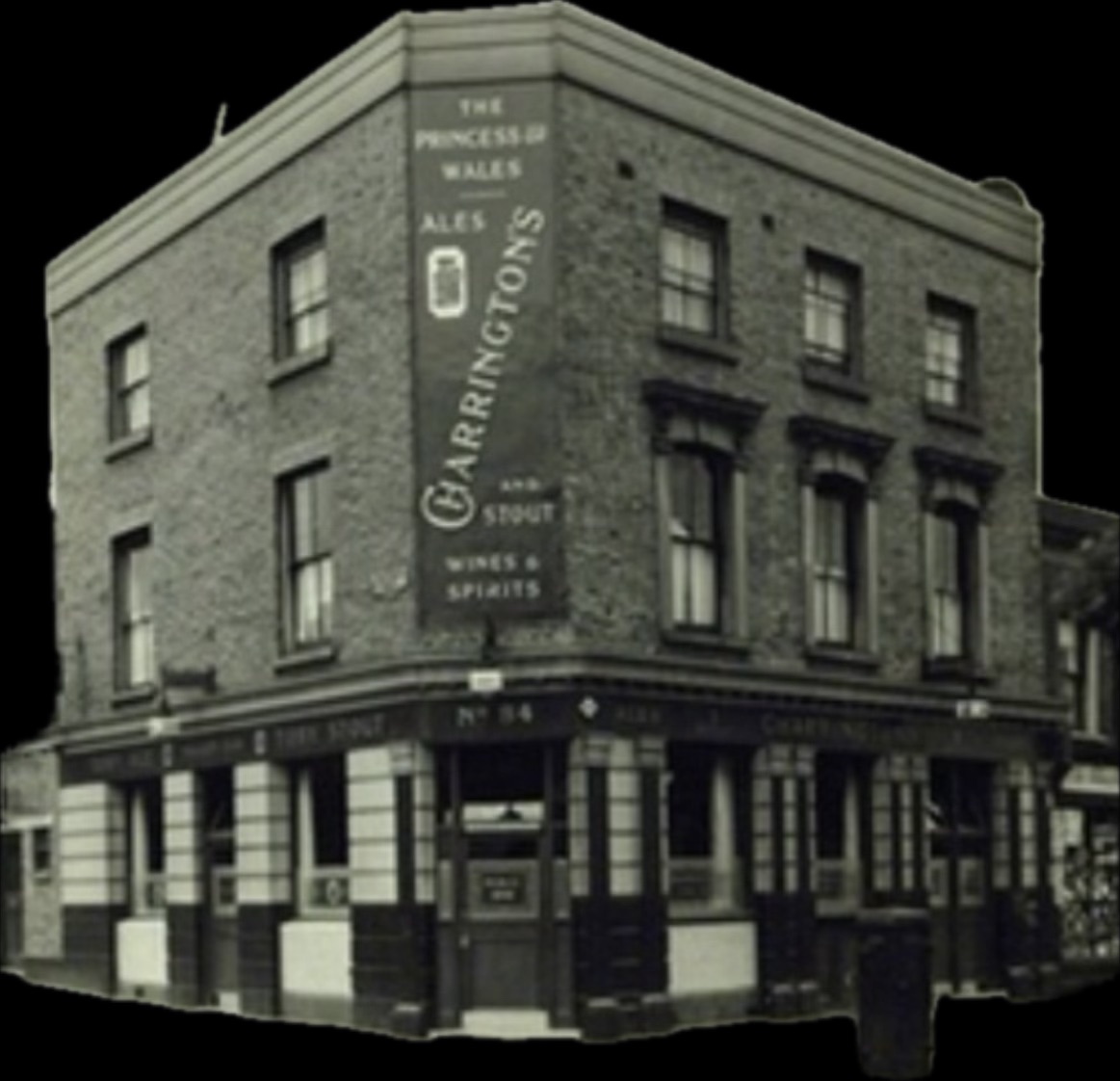
All in all, thinking back now the old boathouse was pretty basic stuff. Whilst our new home was luxurious by comparison, those of us still around now who remember those days have only good memories of what was achieved there. Happy days!!
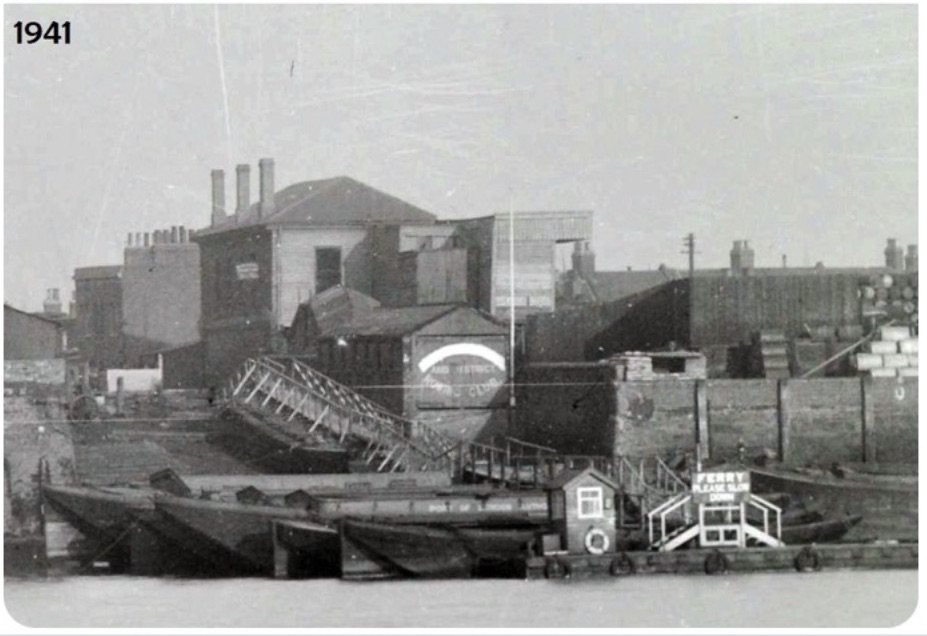
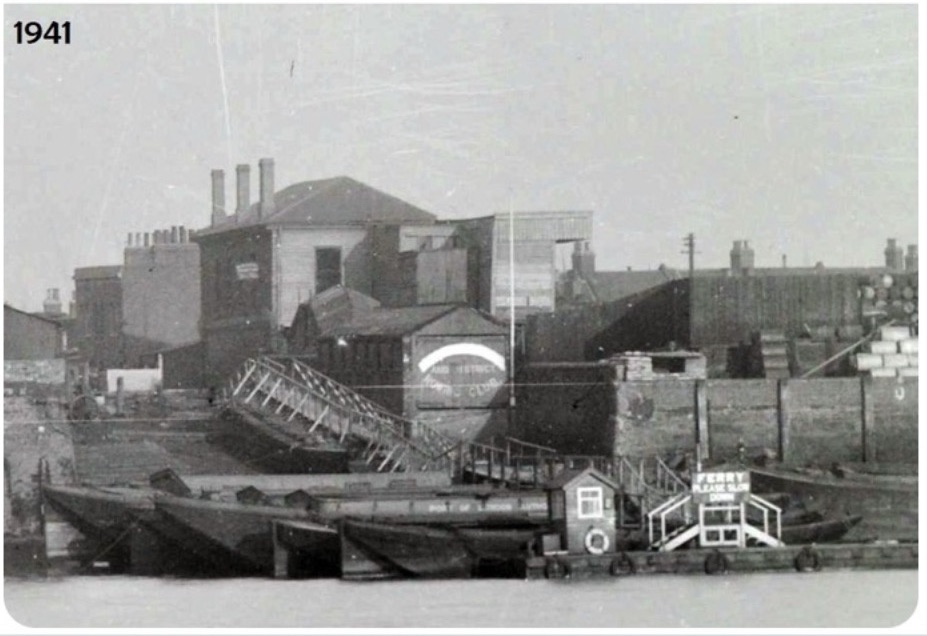
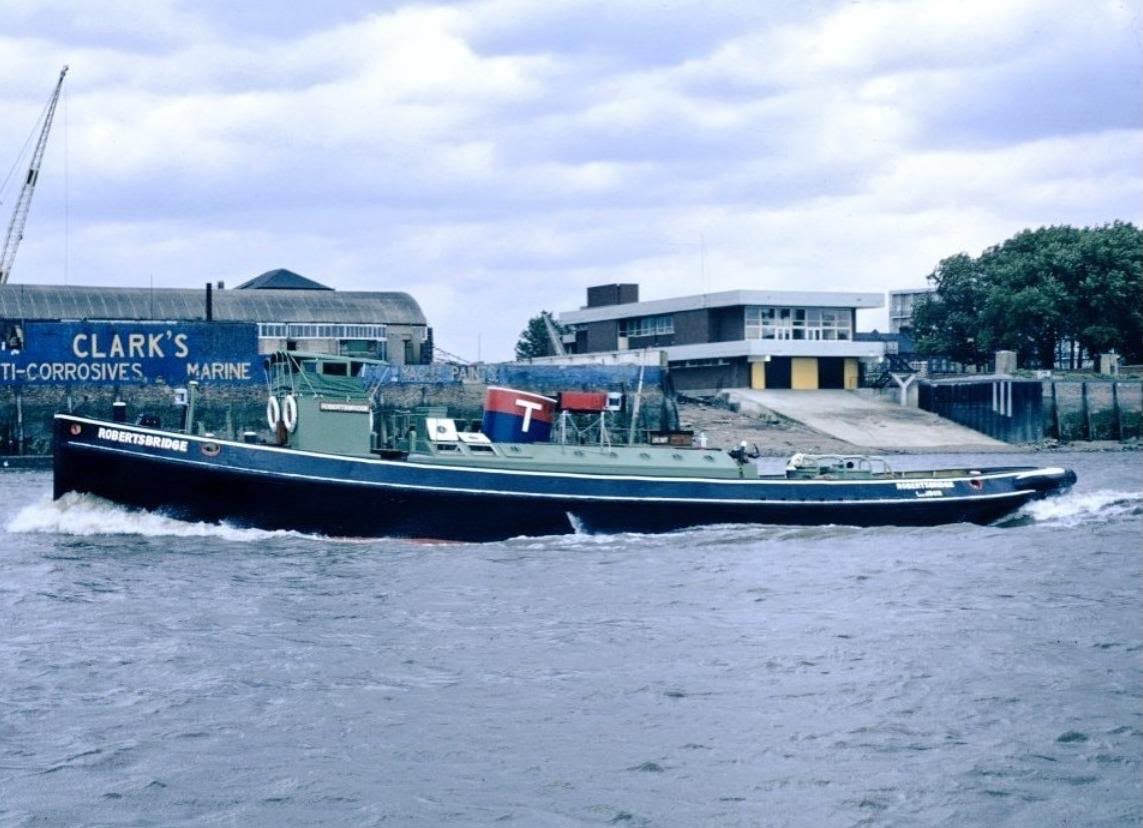
The photo below (b/w on the left) shows a temporary ferry terminal in front of the club that replaced the Greenwich Foot Tunnel after it had suffered bomb damage during WW2. The club’s name had been removed from the boathouse doors under wartime regulations. And no, I didn’t take the photo of the old boathouse!
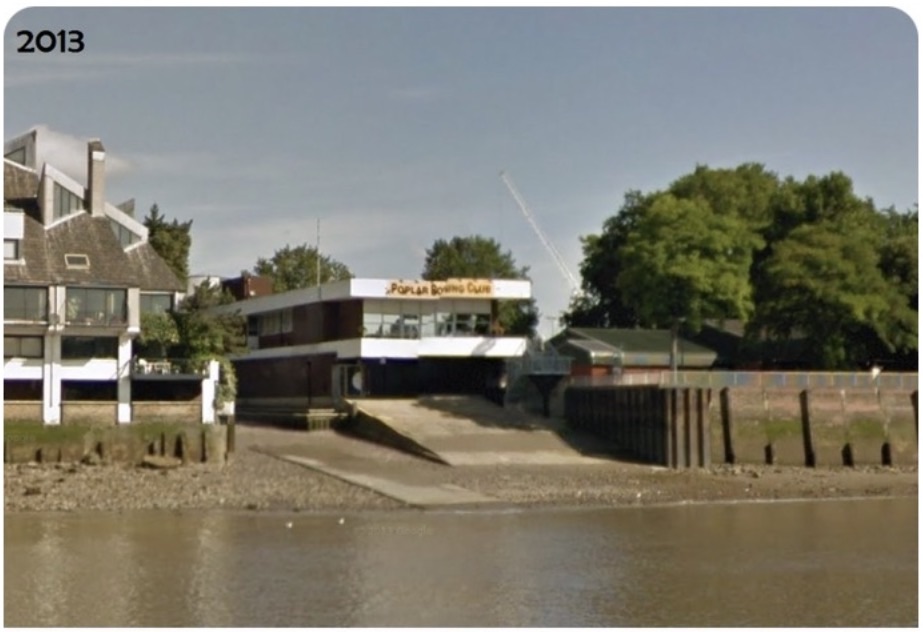
Thank you to Richie for this entertaining and informative account of the boathouse history! We hope to hear more from him soon.
Make sure you have subscribed to The Poplar Press to get more memories and stories like this, and do contact charlotte.kilpatrick@pbdrc.co.uk to share your own.